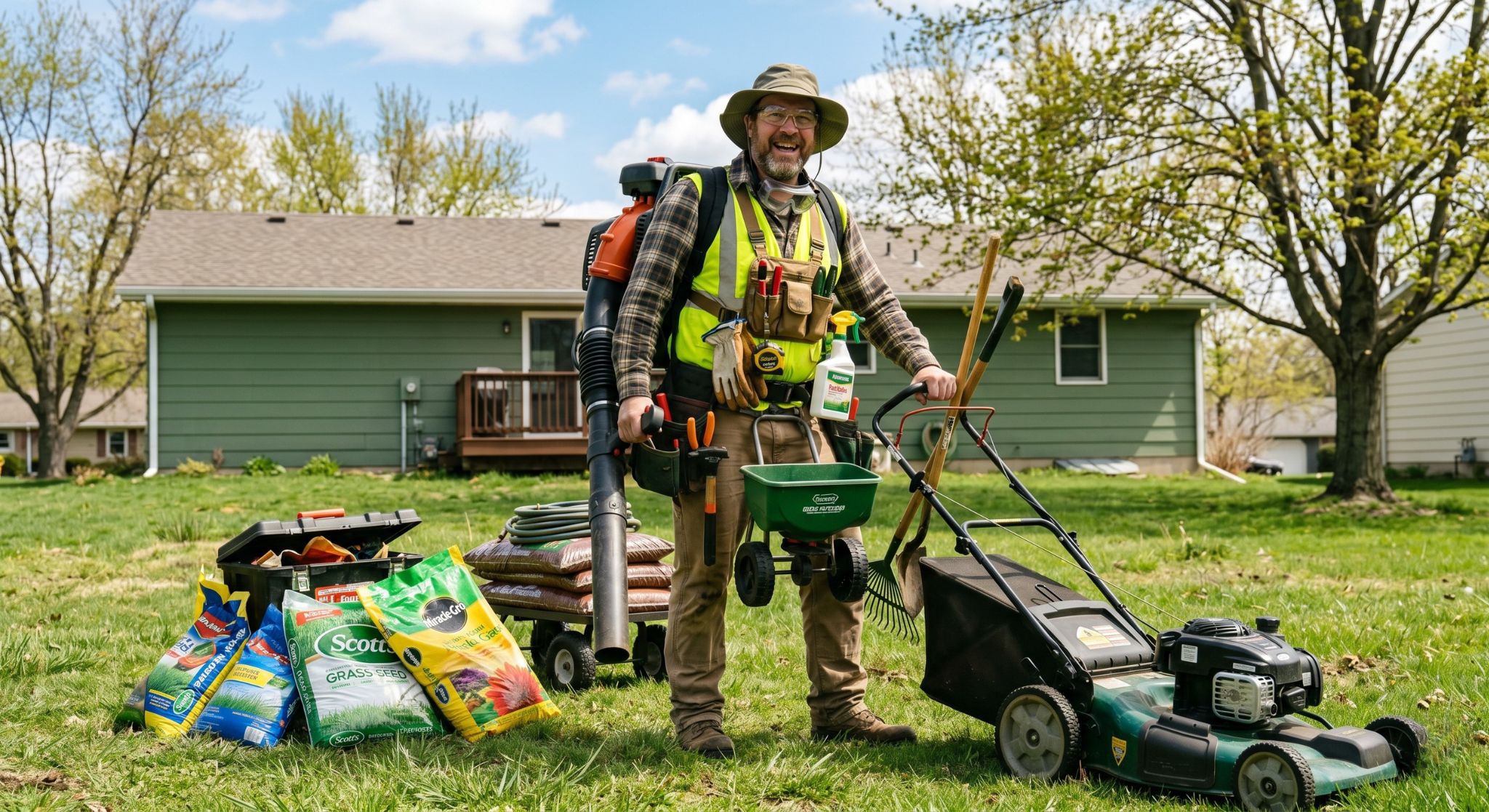
Georgia Lawns Need a Little Help Coming Out of Winter
If you have a Bermuda, Zoysia, or Centipede lawn in Walton County, you know the drill: by the time March rolls around, your grass looks tired, matted, and patchy. A few hours with the right rental equipment in early spring can make the difference between a lawn that limps through summer and one that's thick, green, and the envy of the neighborhood.
Here's exactly what to do, in order, and which tools you need for each step.
Step 1: Dethatch (Late February – Early March)
Thatch is the layer of dead grass stems and roots that builds up between the soil and the living grass. A little thatch is fine — it acts as mulch. Too much (over half an inch) blocks water, air, and fertilizer from reaching the roots.
For most Walton County lawns, dethatching once a year in late winter before green-up is ideal. You want to do this before the grass starts actively growing so you don't damage new shoots.
- Walk Behind Dethatcher — $55 half day / $85 full day. The fastest and most effective option for most residential lawns. Makes quick work of even heavily thatched areas.
After dethatching, rake up and bag the debris — or toss it in a dumpster if you have one. Don't leave the thatch on the lawn.
Good to know: Bermuda and Zoysia lawns tend to build up thatch faster than Fescue. If you have warm-season grass in Georgia, plan to dethatch every year.
Step 2: Aerate (Early March – Mid March)
Aeration is the process of pulling small plugs of soil out of the ground to reduce compaction and allow air, water, and nutrients to penetrate deeper into the root zone. It's one of the highest-impact things you can do for a struggling lawn.
Signs your lawn needs aerating:
- Water puddles or runs off instead of soaking in
- Lawn feels hard and compacted underfoot
- Grass looks thin or stressed despite watering
- You have heavy clay soil (very common in Walton County)
We carry three aerator options depending on your setup:
- Walk Behind Aerator — $55 half day / $85 full day. Best for most homeowners. Self-powered, easy to operate, covers ground quickly.
- Core Aerator (Pull Behind) — $30 half day / $40 full day. Attach to your riding mower or tractor. Good for larger properties.
- Spike Aerator (Pull Behind) — $30 half day / $40 full day. Pokes holes rather than pulling plugs. Less aggressive but good for maintenance aeration on healthier lawns.
For clay-heavy Georgia soil, core aeration (plug pulling) is almost always more effective than spike aeration. The plugs break down on their own within a few weeks — no need to rake them up.
Step 3: Overseed or Top Dress (After Aerating)
Right after aerating is the best possible time to overseed. The holes in the soil give seed direct soil contact, which dramatically improves germination rates. If you have bare spots or a thin lawn, spread your seed immediately after aerating and water consistently for 2–3 weeks.
For Bermuda and Zoysia lawns, this is also a great time to add a thin layer of top dressing (a mix of sand and compost) to help level low spots and improve soil structure.
Step 4: Till or Prep New Beds (March – April)
If you're creating new garden beds, expanding a lawn area, or starting a vegetable garden, spring is the time to till. We have two tiller options:
- Rear Tine Tiller — $65 half day / $85 full day. The workhorse for new beds and hard soil. Counter-rotating tines break up compacted ground much more effectively than front-tine models.
- Mid Tine Tiller — $45 half day / $65 full day. Good for lighter work in soil that's already been broken up, or for smaller garden beds.
Step 5: Clean Up (All Spring)
A clean yard makes everything else look better. Our backpack blower makes short work of leaves, debris, and leftover thatch.
- Backpack Blower — $15 half day / $25 full day. Powerful enough to clear large areas quickly.
The Spring Lawn Prep Schedule
- Late February: Dethatch
- Early-Mid March: Aerate, overseed, top dress if needed
- March–April: Till new beds, fertilize, blow debris
- April–May: First mow of the season once grass reaches 3–4 inches
Local tip: Georgia's last average frost date for Walton County is around mid-March. Hold off on warm-season grass fertilization until nighttime temps are consistently above 60°F — usually late March to early April in Monroe.
Get Your Lawn Ready This Spring
All of our lawn and garden equipment is available for rent in Monroe, GA. Call us and we'll have it ready for you.
See Lawn Equipment Pricing